Shopify themes are quick to launch and hard to differentiate. The client needed Shopify's operational reliability for inventory, orders, payments, and fulfillment, but a storefront with full control over identity, layout, search, and performance.
— Case study 03
Sua Mesa Fit
A custom Shopify storefront without a theme-shaped ceiling

project overview
An online food store where shop management stays in Shopify while the entire customer-facing site is custom-built, distinctive, and fast.
shipped outcome
A custom, server-rendered storefront with fast search and cart shipping calculation, backed by the Shopify operations the client already trusted.
- Role
- Frontend product engineering
- Timeline
- 2 months
- Year
- 2024
- Team
- Small delivery team
The storefront is headless. Shopify remains the source of truth for commerce operations while a separate Hydrogen application renders the customer experience from Storefront API data. Checkout stays on battle-tested Shopify infrastructure instead of being rebuilt unnecessarily.
A custom, server-rendered storefront with fast search and cart shipping calculation, backed by the Shopify operations the client already trusted.
— Interface evidence
The product, not a placeholder
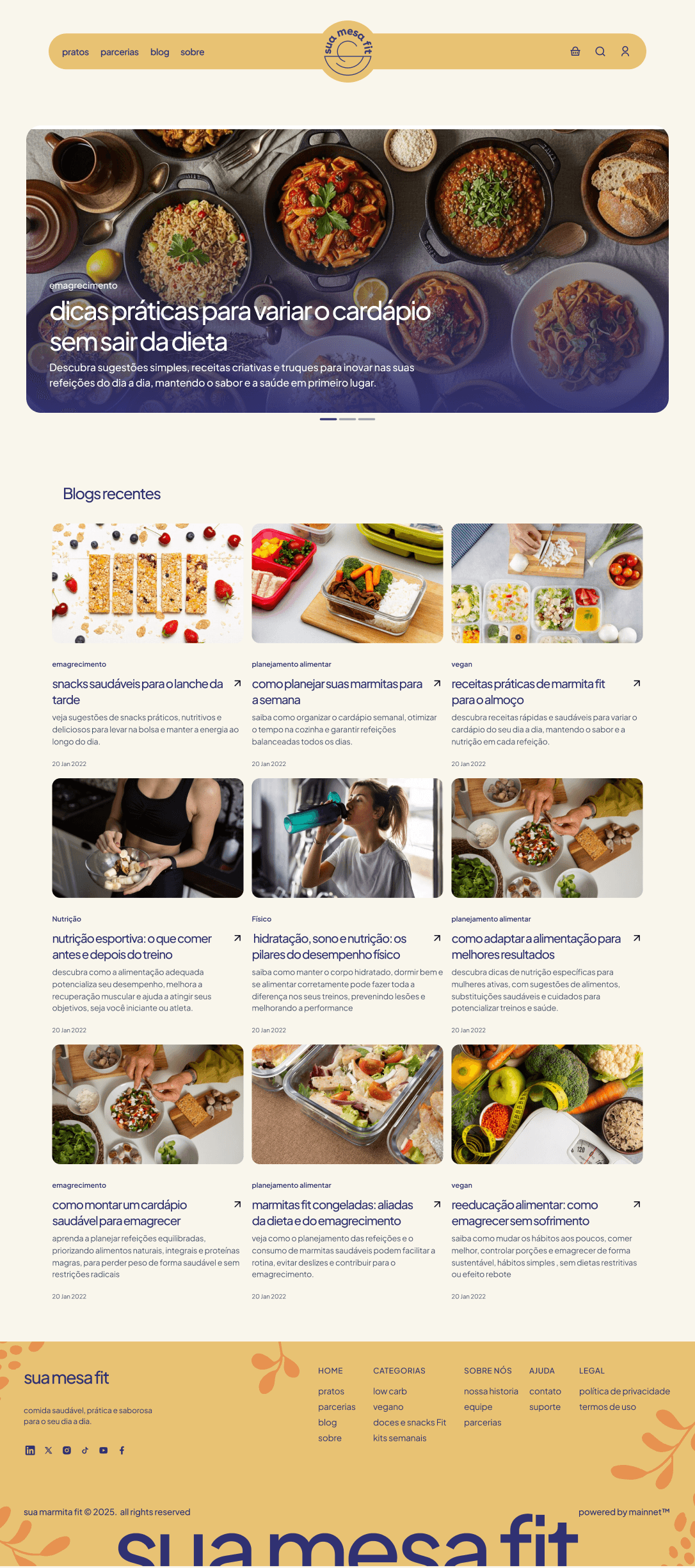
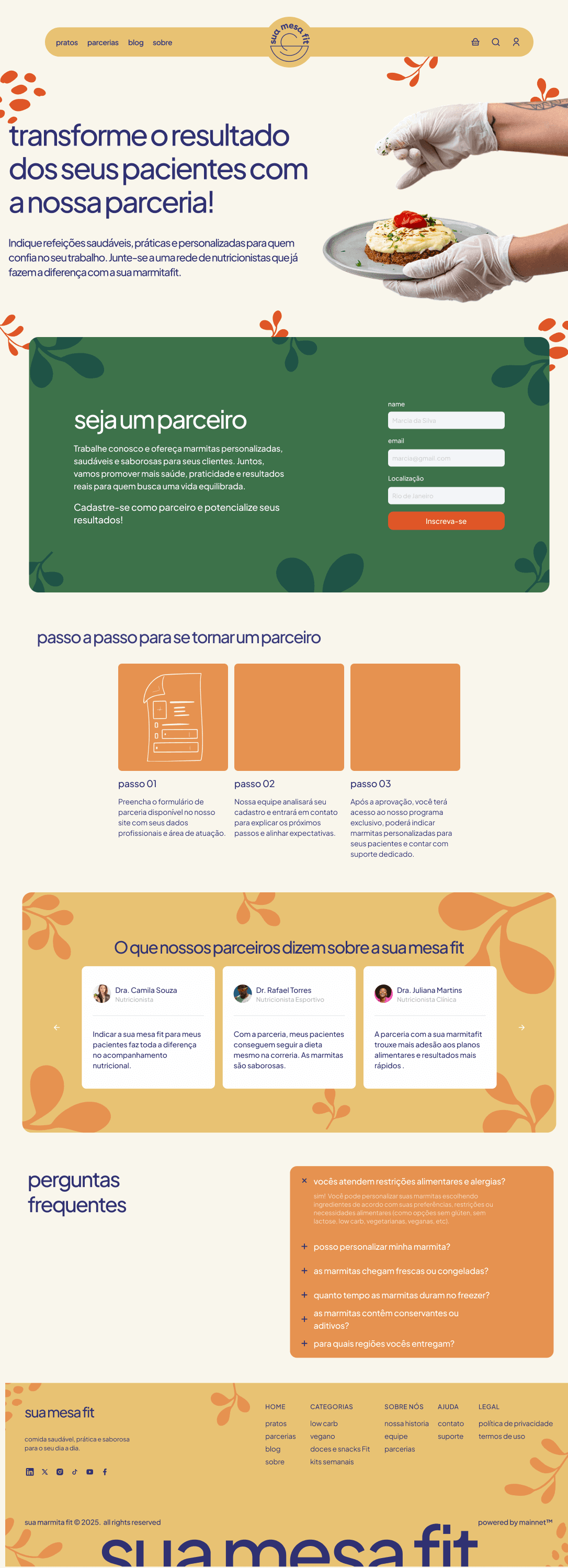
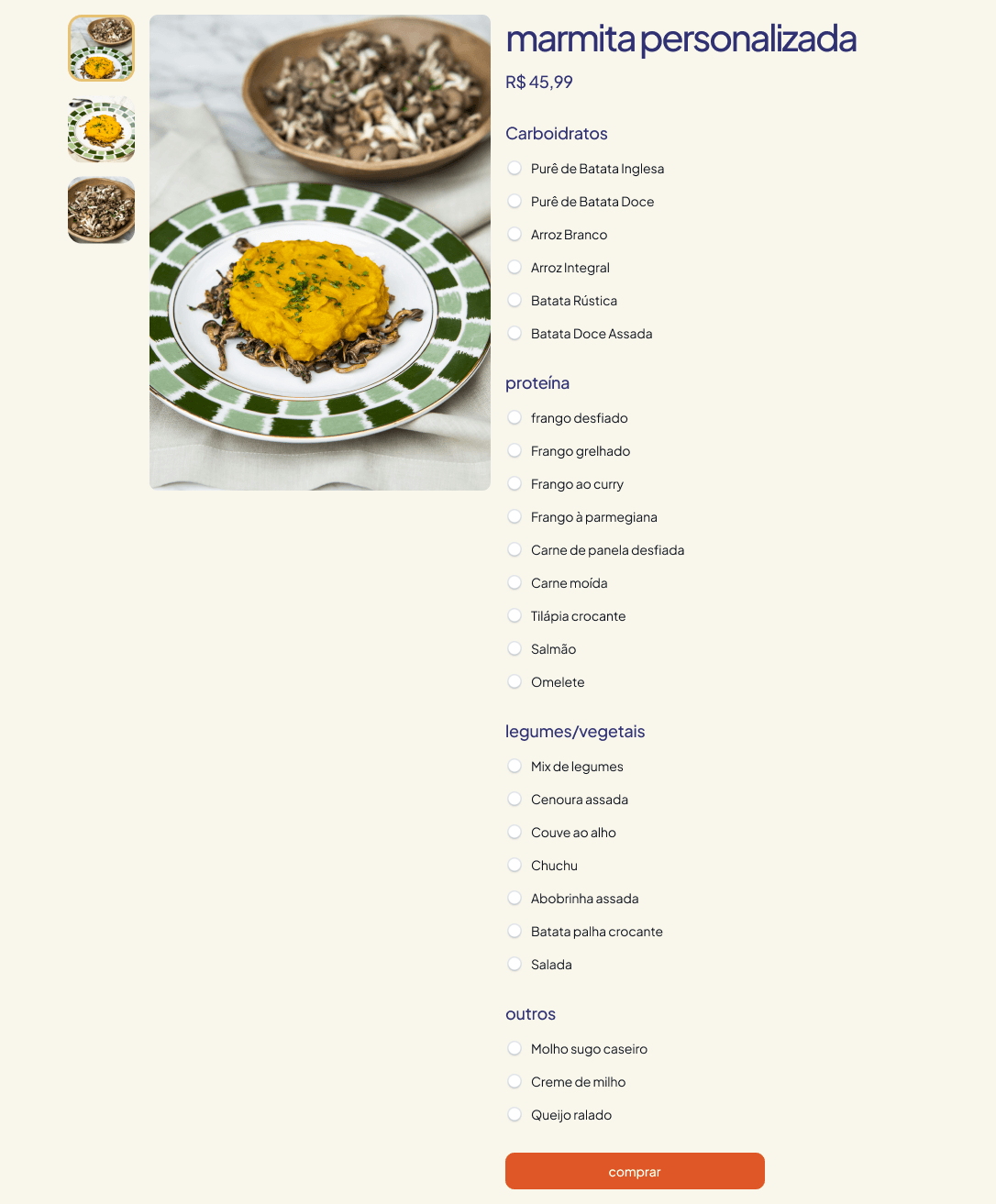
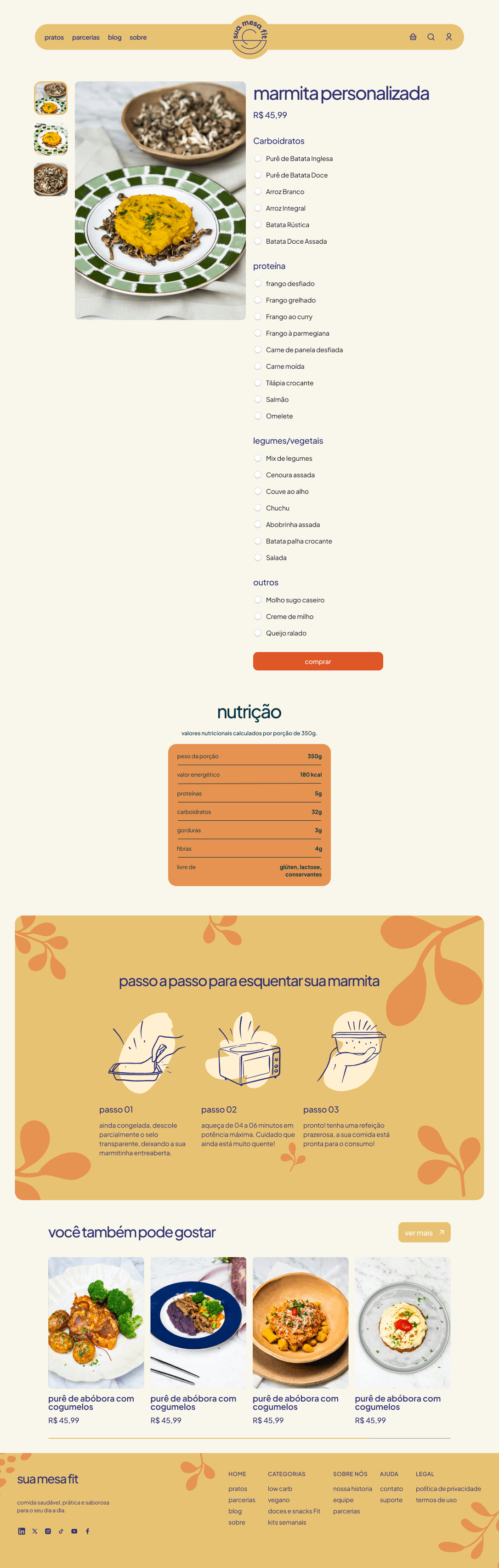
These are the verified interface captures from the project build. Scroll inside taller frames to inspect each complete page.


— Delivery process
From operating constraint to shipped system
The work is sequenced around risk. Domain rules and failure states come before interface polish; automation arrives before handoff.
Audit the catalogue
Products, variants, collections, and availability rules were mapped first because the data model determines what the interface can express.
Build the commerce system
Product cards, variant selectors, search results, cart lines, and price states became reusable components before pages were assembled.
Optimize product discovery
GraphQL query shape and result rendering were tuned around the search path where conversion friction is most visible.
Connect cart and shipping
Optimistic cart updates stay responsive while Shopify remains authoritative for lines, totals, and shipping calculations.
— System architecture
Clear boundaries, explicit responsibilities
Each layer has one job and a narrow contract. That keeps external services replaceable and product behavior testable.
R$ 019,90
R$ 029,90
R$ 039,90
R$ 049,90
cart / 03
Hydrogen / Remix
Server-rendered routes with nested data loading and commerce-aware caching.
Shopify Storefront API
Products, collections, search, variants, and cart mutations over GraphQL.
Shopify Admin API
Server-only access for operations that must never expose elevated credentials.
Shopify checkout
Payments, tax, orders, and fulfillment remain on mature platform infrastructure.
— What shipped
Product capabilities
Purpose-built storefront UI
The customer experience is composed from custom components rather than constrained by a purchased theme.
Fast product search
Route-specific GraphQL queries keep discovery payloads focused and responsive.
Shipping-aware cart
Customers see cart state and shipping feedback before committing to checkout.
— Engineering pressure
Challenges resolved
GraphQL over-fetching
Each route requests only the fields it renders so catalogue growth does not inflate every payload.
Cart consistency
Optimistic updates keep interactions immediate while server reconciliation preserves Shopify as the source of truth.
Variant complexity
The selector prevents impossible option combinations and keeps availability legible as dimensions multiply.
verified project destinations
next transmission
Need a system this deliberate?
Bring the operating problem. We will shape it into a clear product brief and a buildable next step.
Start a project